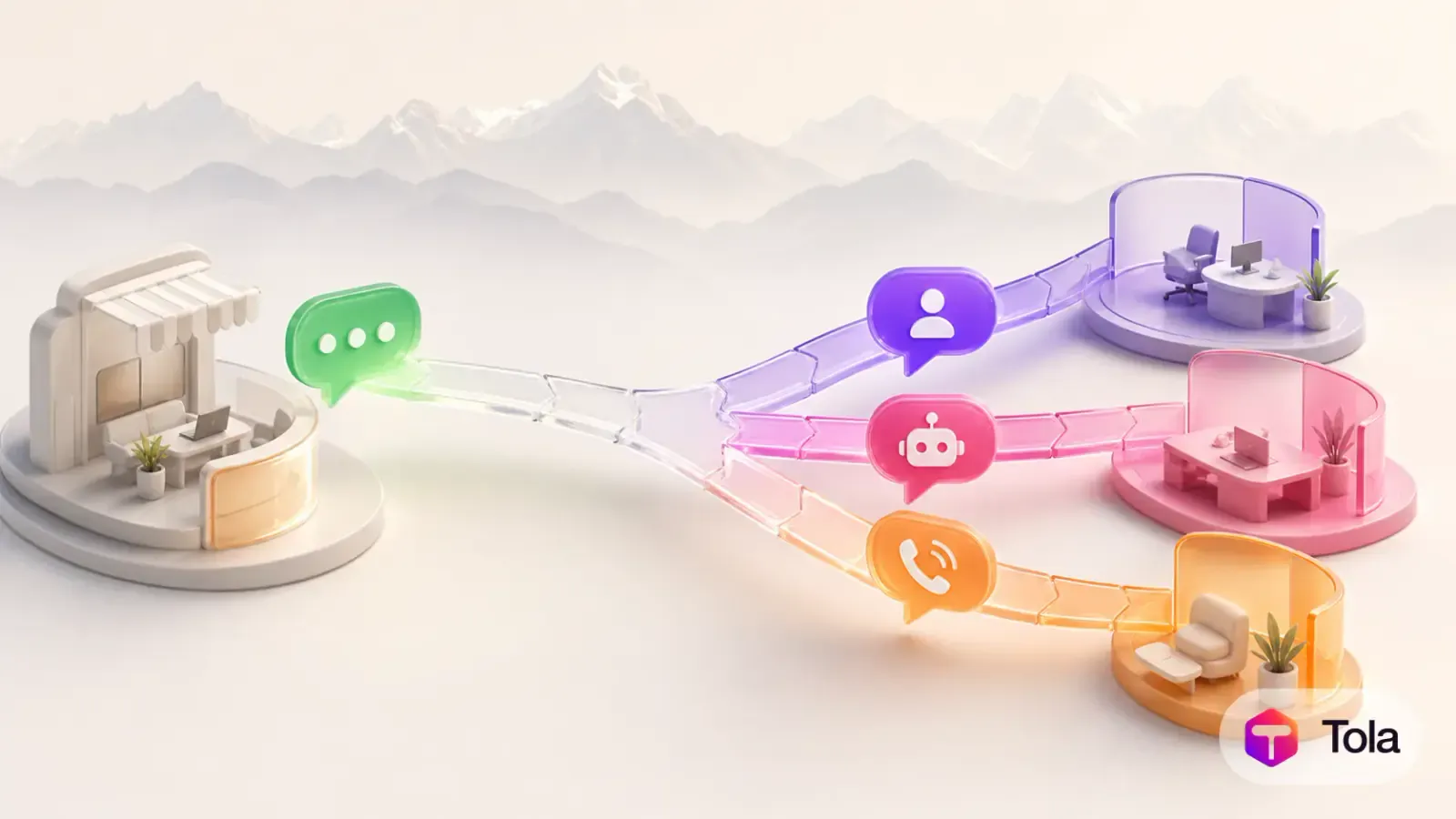
Bulk SMS in Nepal: A Practical Business Guide
Bulk SMS in Nepal gives companies a direct way to send service alerts, reminders, transaction updates and carefully permissioned promotions to mobile customers. The important first step is not choosing a dashboard; it is deciding whether the message is a one-way alert, a broadcast or a two-way interaction. That choice affects the carrier service, sender identity, customer experience and operating process behind every message.
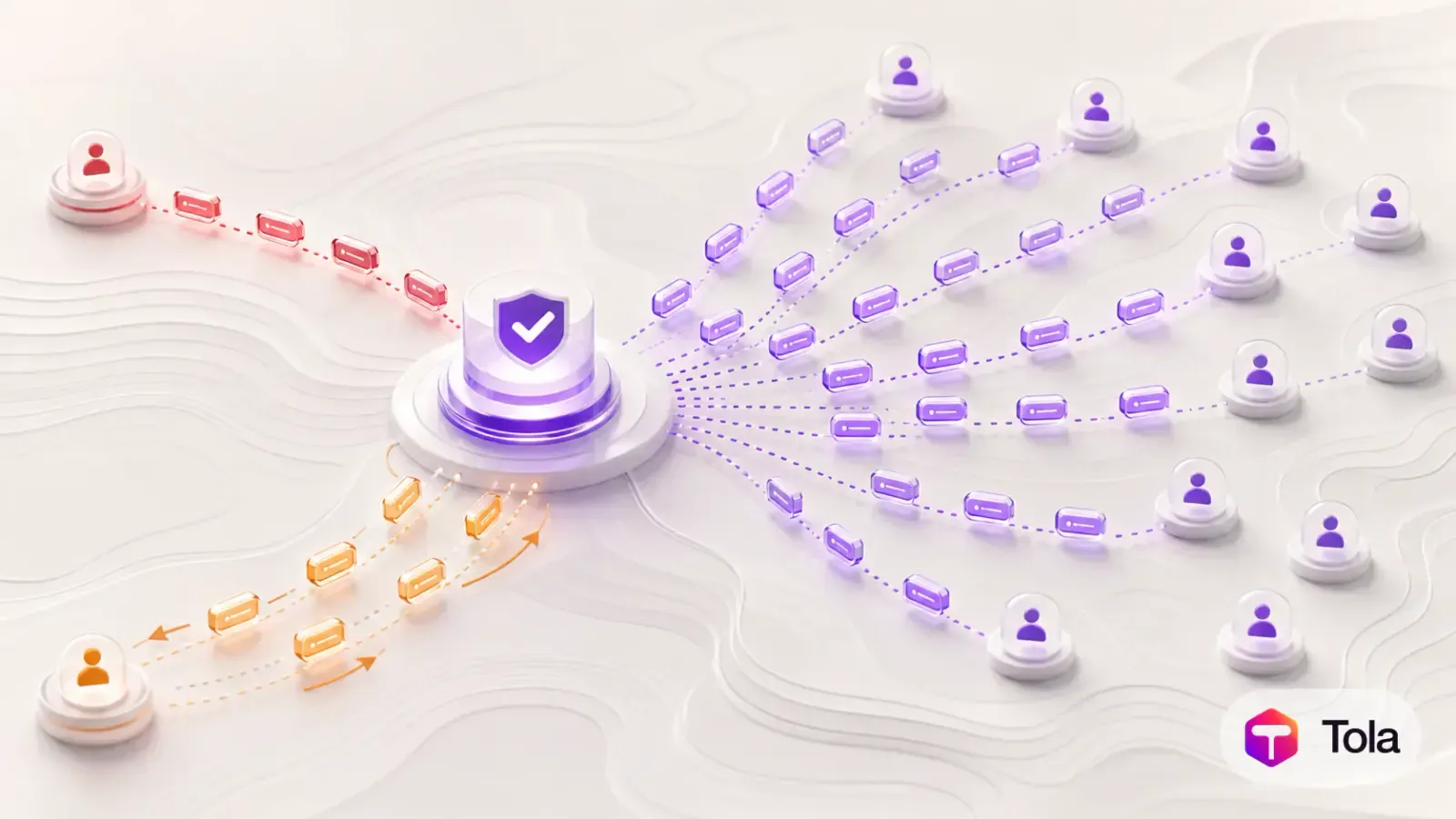
The cover illustration is a stylised diagram: a verified sender fanning message streams out to many recipients. It is not a product screenshot and does not imply that a carrier connection is active. Supported Nepal carrier messaging is configured beside WhatsApp, voice, email and web channels once eligibility and account setup are confirmed.
What bulk SMS in Nepal includes
“Business SMS” is an umbrella term. Two services can both send text messages and still solve very different problems. Nepal Telecom’s official service page distinguishes SMS Alert, SMS Short Code and Web-based Bulk SMS. Ncell’s official pages similarly describe one-way bulk SMS and interactive short-code services. Confirm the current product name and onboarding route directly with the carrier before making a buying decision.
One-way alerts and transactional updates
A one-way service is appropriate when the recipient needs information but does not need to answer the message. Common examples include payment confirmation, appointment reminders, delivery updates, account notices and emergency operational messages. The message should identify the sender, state the useful fact early and give the customer another contact route when follow-up may be needed.
Bulk messages for a defined audience
Bulk SMS sends a message to many selected recipients. Nepal Telecom describes its web-based service as a broadcast product for organizations such as schools, colleges, businesses and SMEs. Ncell also lists Enterprise Bulk SMS among its business mobility services. “Bulk” should describe the delivery method, not permission to message an unqualified list. List quality, consent and relevance remain business responsibilities.
Two-way short codes
A short code supports an interactive flow in which a customer can send a response or query. Nepal Telecom lists exam results, polling, voting and quiz services as examples, and says technical testing and NTA approval are involved. Ncell’s service description also separates its interactive short-code service from one-way bulk SMS. If replies are central to the workflow, do not design around a one-way sender ID.
Choose a business SMS service for the job
Begin with the customer event and work backward. A school announcing a closure, a clinic reminding a patient and an online store confirming an order do not need the same content, timing or response path. Write a one-sentence job for the message before discussing volume or price.
Define the event. What action or system state causes the message to be sent?
Define the audience. Which customers should receive it, and what permission record supports that choice?
Define the response path. Should the recipient reply, call, open a link or simply keep the information?
Define success. Measure delivery and the business outcome, such as confirmed appointments or resolved delivery questions.
Verify current terms. Ask the carrier or authorized provider about onboarding, sender identity, taxes, quotas, validity and reporting.
For source information, review Ncell’s Bulk SMS and Short Number page and Nepal Telecom’s SMS Based VAS Services page. Carrier pages can change, so treat them as the current starting point rather than a permanent quotation or a Tola price list.
Do not compare only the headline rate
A reliable cost estimate includes message volume, applicable taxes, minimum commitments or validity, setup work, sender-ID requirements, integration work and the staff time needed to review failures. Published carrier tables may distinguish customer type and volume band. Request a current written quotation for the actual use case instead of copying an old rate into a budget.
Design a reliable business SMS workflow
Delivery is only one part of the system. A production workflow also needs clean recipient data, a clear trigger, approved copy, failure handling and an owner. The best starting project is usually a narrow, repeatable notification tied to a trusted business event.
Use a verified phone number format and remove duplicates before sending.
Keep a record of the customer’s permission and the source of that permission.
Separate operational alerts from promotional campaigns so expectations stay clear.
Use message templates with variables only for fields the source system can supply safely.
Route delivery failures and customer questions to a named team rather than leaving them in a report.
Review access controls: only authorized staff should export numbers or launch a broadcast.
Write for a small screen and a busy reader
Put the business name and purpose near the beginning. Use plain language, one primary action and an honest deadline. Avoid unexplained abbreviations. If a message contains a link, use a trusted domain that customers can recognize. Nepali-language content should be reviewed by a fluent human for tone and meaning instead of relying on literal translation.
Plan the handoff before sending
Even a one-way update can generate calls or WhatsApp messages. Prepare the support team with the message copy, send time, affected audience and the correct answer. Tola’s shared inbox can give agents one place to see connected conversations, while the AI help desk can organize follow-up around tickets and customer context. Availability depends on the configured channels and account.
How Tola connects SMS with customer support
The carrier remains responsible for the mobile network service. Tola’s role is to help a team operate customer conversations around supported carrier connectivity. A useful architecture is: the business system creates an approved event, the messaging connection sends the alert, delivery information is retained, and any resulting customer conversation is assigned to the right person with context.
This is especially useful when SMS is the notification layer but resolution happens somewhere else. A delivery message may lead to a phone call; a payment reminder may lead to WhatsApp; a school notice may lead to a ticket. A shared workspace reduces the chance that each channel becomes a separate queue with no owner.
Before rollout, ask Tola which sender types, networks, delivery events and inbound options are supported for your account. Bring the real workflow, target volume and approval requirements to the discussion so the team can provide a Nepal-specific setup review.
How we verified this guide
We checked the public Ncell pages for Enterprise Bulk SMS and bulk SMS or short-number services, and the Nepal Telecom SMS Based VAS Services page. Those sources support the service categories described here. We did not infer a private commercial agreement, guaranteed delivery level or current Tola selling price from the carrier pages. Product availability, rates, taxes, approvals and onboarding steps should be reconfirmed with the relevant provider before purchase.
A sensible first launch is one permissioned, operational message with a clear owner and response path. Test it with controlled recipients, inspect failures, brief the support team and expand only after the workflow behaves as expected. Tola can help connect that messaging activity with calls, WhatsApp, email and tickets. Bring one real use case to a Tola consultation and map the complete journey before discussing a larger campaign.
Frequently Asked Questions
- What is business SMS in Nepal?
- Business SMS is operator-provided messaging used by organizations for alerts, updates, promotions or interactive services. The available setup can include one-way sender-ID messages, web-based bulk messaging and two-way short codes.
- Can customers reply to every business SMS?
- No. One-way alert and bulk SMS services generally do not accept replies. A business that needs inbound responses should ask about an approved two-way short-code service or direct customers to a supported reply channel.
- How should a business choose between Ncell and Nepal Telecom?
- Start with audience coverage, use case, sender identity, expected volume, onboarding requirements, reporting and current commercial terms. Many businesses may need delivery across both networks rather than treating the decision as either-or.
- Can Tola replace a mobile network operator?
- No. Mobile operators provide the network messaging service. Tola is the customer-service workspace that can connect supported carrier messaging with conversations, assignments, tickets and follow-up workflows.
- Should marketing SMS require customer consent?
- Businesses should document a lawful customer permission process, explain what messages people will receive and provide a practical way to stop them. Obtain advice appropriate to the organization and verify current carrier and regulatory requirements before launch.
Customer Experience Research
The Tola team writes practical guides for Nepali businesses managing customer conversations across calls, WhatsApp, SMS, email and tickets.