How to Choose Customer Support Software in Nepal
Choosing customer support software in Nepal requires more than comparing feature lists written for another market. A platform may advertise an inbox, automation and AI, yet struggle with Nepal’s UTC+05:45 business hours, mixed Devanagari and Romanized messages, local phone connectivity or WhatsApp-led workflows. The right system should make every customer conversation visible, give each request a clear owner and let automation hand work to a person without losing context. This guide gives you practical tests you can run with your own team and customer messages. It does not rank vendors using invented scores; it helps you produce evidence before you commit.
What customer support software in Nepal must handle
Start with the work customers already send you. For many Nepali businesses, that work is distributed across WhatsApp, email, phone calls, SMS and informal follow-ups. A tool is useful only when it turns those contacts into an accountable workflow. A polished chatbot cannot compensate for missed calls, unassigned messages or customer history split across personal devices.
One customer, one usable history
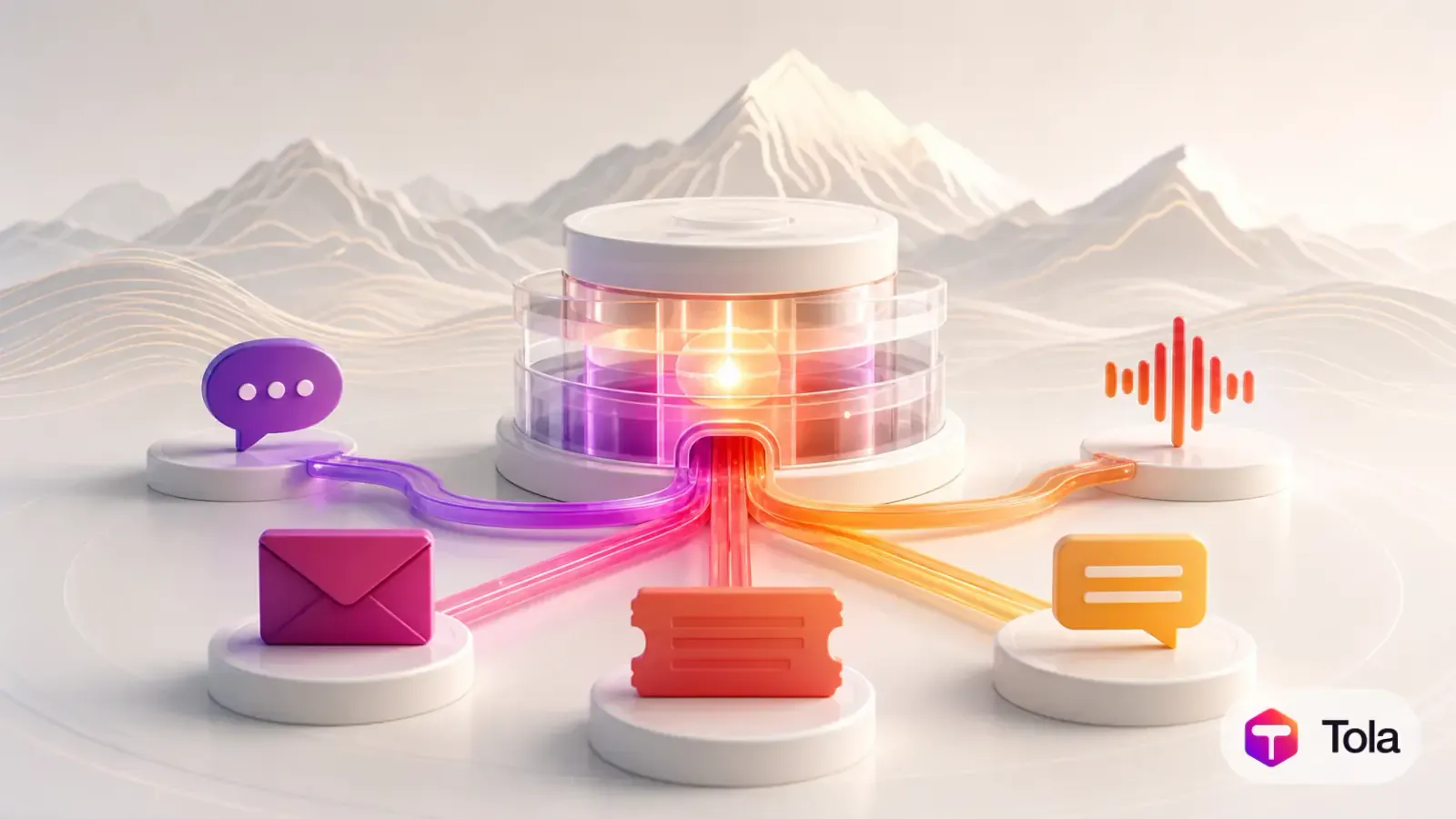
A customer may ask a question on WhatsApp, call when the answer is urgent and send a document by email. Test whether the platform connects those interactions to one profile or makes the team search three systems. Tola’s shared inbox is designed to keep messages, tickets and calls visible in one operating queue, but you should still test the exact identity-matching rules your business needs.
Ownership before automation
Assignments, internal notes, collision detection and clear status are foundational. Without them, two agents may answer the same request while another request receives no answer. Ask the vendor to demonstrate what happens from arrival to resolution, including reassignment, escalation and the return of a reopened conversation.
Eight tests to run before you buy
Use a trial or live demonstration and run the same script against every shortlisted platform. Do not accept a supported-features page as the result. A twenty-minute test with real examples will reveal more than a long sales presentation.
Nepal time: set business hours in Asia/Kathmandu, then verify an after-hours message at the exact boundary. Nepal uses a 45-minute UTC offset; the IANA Time Zone Database is the authoritative technical reference.
Devanagari search: send a real Nepali sentence, then search for a word from its middle. Repeat after exporting the conversation.
Romanized Nepali: write the same request in Latin characters using two natural spelling variations. Test search, routing and AI retrieval.
WhatsApp ownership: assign a conversation, add an internal note, hand it to another agent and verify that the customer history remains intact.
Phone continuity: place a test call, transfer or escalate it, and check whether the transcript, summary and next action appear beside the customer record.
AI boundaries: ask one routine question and one sensitive question. Confirm when AI answers, drafts for approval or hands off.
Reporting: locate first response time, unresolved volume and channel workload without exporting data to repair it manually.
Exit test: export conversations, contacts and attachments in a format your team can actually reuse.
For WhatsApp, also confirm that the setup uses the official business infrastructure and that template and account requirements are current. Meta’s WhatsApp Cloud API documentation should be treated as the source of truth because platform rules can change.
Choose the right product category
“Customer support software” can describe several different products. Choosing the wrong category creates either a tool that is too shallow for the job or a deployment that is more complex than the team can operate.
Shared inbox: best when a small team needs ownership, collaboration and one history across messaging and email.
Help desk: useful when requests need ticket states, priorities, service targets and structured escalation.
Call center platform: appropriate when call queues, routing, recordings, supervision and phone reporting are central.
AI-first support platform: useful when repeatable questions and workflows can be automated with explicit human handoff.
Omnichannel platform: strongest when the same team handles calls, WhatsApp, SMS, email and tickets for the same customers.
Tola combines an AI customer support layer with shared ownership and an AI call center. That combination is relevant when conversations cross channels. It may be unnecessary for a business that only sends one-way campaigns or needs a specialist enterprise workforce-management suite. An honest shortlist should include both fit and non-fit criteria.
Compare total operating cost, not one headline price
The monthly subscription is only one part of cost. Model the number of teammates, expected messages and calls, required phone numbers, provider charges, AI usage, onboarding and integrations. For voice automation, ask whether telephony, speech recognition, language-model processing, speech generation, recording and storage are included or passed through separately.
Use three scenarios: an ordinary month, a busy month and a launch or incident spike. Ask for a sample invoice using those assumptions. Also ask what counts as billable usage, how short calls are rounded, whether failed attempts are charged and what happens when usage exceeds the plan. Tola separates variable voice and provider costs from the workspace subscription on its pricing page, so buyers can evaluate the components instead of relying on an “unlimited” label.
How we verified this guide
We built this guide from tests a buyer can reproduce, Tola’s documented product workflows and primary platform references. We did not use unsupported market-size figures, claimed response-time improvements or language-accuracy percentages. Product availability can depend on the customer’s number, provider and rollout stage, while third-party requirements can change. Before publication and after every material product update, the Tola team should rerun the timezone, language, channel, export and handoff tests described above.
The best decision is the one your team can prove with its own conversations. Choose three common requests, one difficult escalation and one after-hours case, then run all five from first contact to final resolution. If the platform preserves context, ownership and a clear next action across every step, you have evidence of fit. If you want to run that evaluation on Tola, book a product walkthrough and bring the workflows that cause the most missed replies today.
Frequently Asked Questions
- What should Nepali businesses look for in support software?
- Test Nepal business hours, Devanagari and Romanized text, the channels your customers use, clear conversation ownership, human handoff, reporting and full data export.
- Why does Nepal’s time zone need a product test?
- Nepal uses UTC+05:45. Business hours, scheduled messages, reports and after-hours routing should all be tested at the exact boundary rather than assumed to work.
- Should calls and WhatsApp be in the same inbox?
- If the same team supports the same customers across both channels, a shared history reduces repeated questions and gives the next agent useful context.
- How should a business test AI customer support?
- Use real routine, ambiguous and sensitive questions. Verify the answer source, approval rules, escalation reason and context passed to a human.
- How can buyers compare customer support software costs?
- Model subscription, seats, channels, provider fees, AI usage, telephony, onboarding and integrations under normal, busy and peak scenarios.
Customer Experience Research
The Tola team writes practical guides for Nepali businesses managing customer conversations across calls, WhatsApp, SMS, email and tickets.